How Do Heated Vests Work? Battery Life, Safety and Buying Tips
Affiliate disclosure: This guide contains affiliate links. If you buy through one of them, My Pick Review may earn a commission at no extra cost to you. Product details, prices, and availability can change; verify important specifications with the seller before ordering.
A heated vest adds adjustable warmth around your torso without the bulk of a second heavy coat. That sounds simple, but choosing one can be confusing: heat-zone counts vary, battery claims are difficult to compare, sizing is inconsistent, and not every model includes a power bank.
This research-based guide explains how heated vests work, what affects battery life, how a vest should fit, and which safety and care details deserve attention. It does not claim that every model works the same way or that the products linked below were physically tested.
Quick answer: how does a heated vest work?
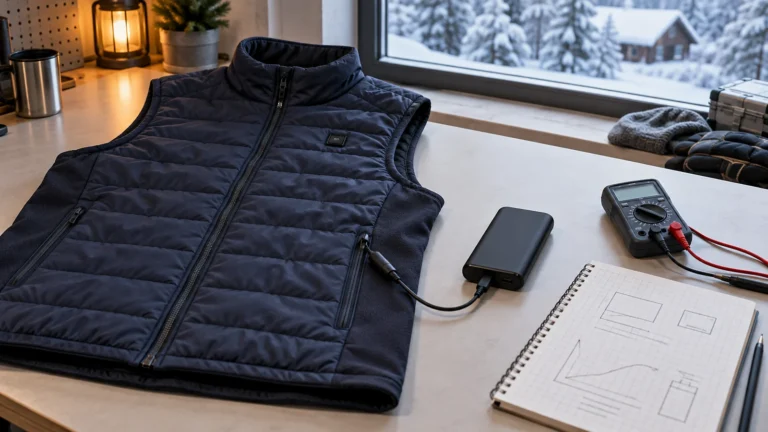
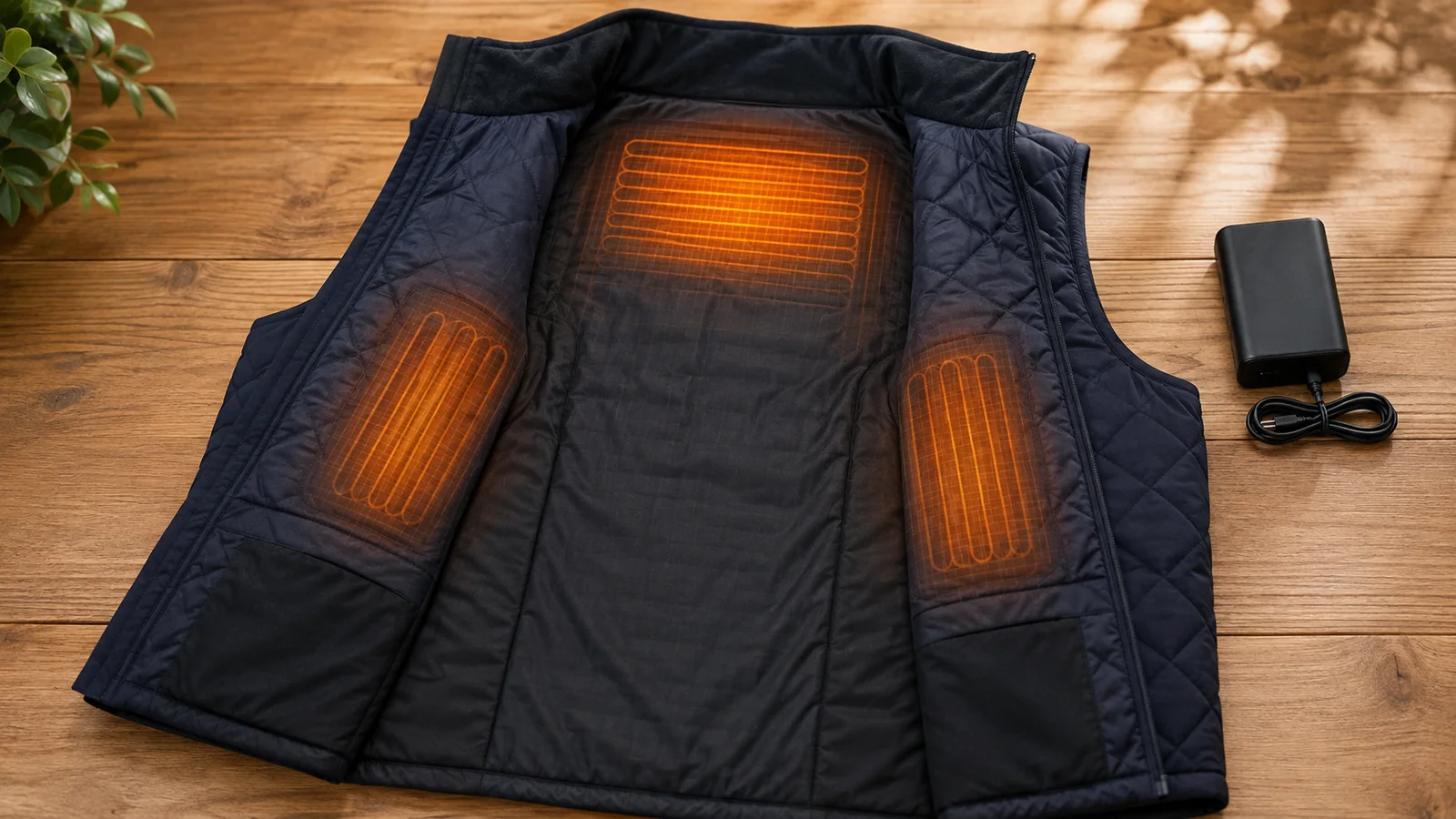
A heated vest uses a rechargeable battery or compatible power bank to send electrical current through flexible heating elements sewn between fabric layers. Resistance in those elements produces heat. A control button usually lets you switch among several temperature levels.
The elements are commonly placed across the chest, upper or lower back, collar, or pockets. More zones can improve coverage, but zone count alone does not tell you how warm, even, comfortable, or efficient a vest will feel. Panel position, battery output, insulation, fit, wind, and the selected heat level all matter.
A heated vest should be treated as one part of a cold-weather system—not a replacement for appropriate layers, weather protection, breaks, and good judgment in severe conditions.
The four parts that matter most
1. Heating elements
Many current vests advertise carbon-fiber or similar flexible heating panels. These panels are designed to bend with the garment and warm selected areas rather than the entire piece of clothing.
Look beyond a large zone count. A model with fewer well-positioned panels may suit you better than one with many small panels in places you barely notice. Think about where you feel cold first:
- Chest and upper back zones suit general core warmth.
- Lower-back zones may be useful when sitting or working outside.
- Collar zones can feel helpful in wind but may be too warm for some users.
- Pocket zones prioritize cold hands, although gloves are still important.
2. Battery or power bank
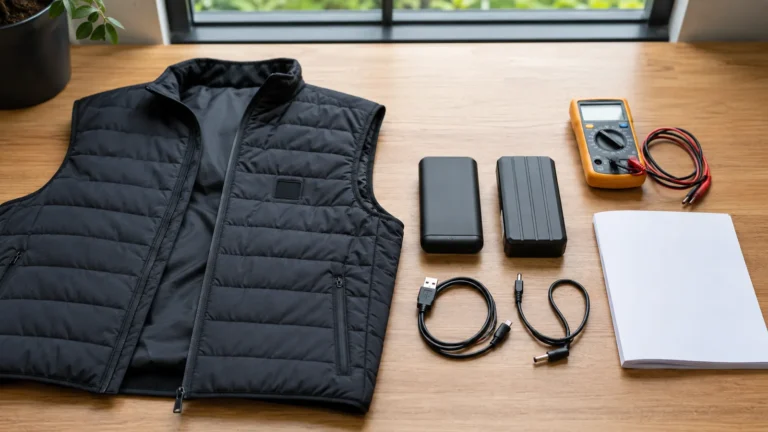
Some vests include a proprietary battery; others require a compatible USB power bank. Confirm this before comparing prices. A cheaper vest may cost more after you buy the required battery and charger.
Check the manufacturer’s stated voltage, connector, output requirements, and approved battery type. Do not assume that any power bank with a matching plug is suitable. If a product uses a proprietary battery, also check whether replacements are available and reasonably priced.
3. Controller and heat settings
Most heated vests use a button on the chest to turn the system on and change heat levels. Useful controls should be easy to operate with gloves, show the selected level clearly, and avoid accidental activation under another layer.
Separate controls for different zones can be convenient, but they also add complexity. A simple one-button design may be better if you want fast, predictable operation.
4. Insulation and shell
The battery creates heat, while the vest’s insulation and outer fabric help retain it. A thin vest can layer comfortably but may lose warmth quickly in wind. A heavily insulated vest may stay warmer after the power is switched off, but it can feel bulky during active use.
For snow, light rain, or exposed work, check the seller’s exact water-resistance claim. “Water-resistant” does not automatically mean waterproof, and the battery connection still needs to remain dry.
How should a heated vest fit?
A heated vest generally works best when it sits close enough for the warming panels to transfer heat through your base layer. It should not be so tight that it restricts movement, compresses insulation, or feels uncomfortable when you bend and reach.
NIOSH recommends several layers of loose clothing in cold environments because layering provides better insulation.[1] A practical system is:
- A dry, moisture-managing base layer.
- The heated vest as a close but comfortable mid-layer.
- An insulating or weather-resistant outer layer when conditions require it.
Measure your chest and waist, then compare both measurements with the specific brand’s size chart. Do not order only by your usual T-shirt size. Also check whether the listing uses garment measurements or body measurements and whether reviewers repeatedly mention a short torso, narrow armholes, or inconsistent sizing.
If you expect to wear the vest over a sweatshirt, measure while wearing a similar layer. If it will sit under a coat, make sure the combined layers do not restrict your shoulders or neck.
What really affects battery life?
Runtime claims are difficult to compare because manufacturers may test under different conditions. Treat a single “up to” figure as a best-case estimate, not a guarantee.
Battery life usually changes with:
- Heat level: higher settings draw more power.
- Number of active zones: more powered panels can shorten runtime.
- Battery capacity and output: labels are not directly comparable unless the electrical requirements also match.
- Ambient temperature: batteries can perform differently in very cold conditions.
- Wind and outer layers: rapid heat loss may push you toward a higher setting.
- Battery age and condition: rechargeable batteries lose capacity over time.
For longer outings, compare the stated runtime at each heat level, not only the longest advertised figure. Also check whether the battery can be swapped in the field and whether the manufacturer sells replacements.
A useful routine is to preheat briefly, reduce to a lower comfortable setting, and save the highest level for short periods. Do not rely on a heated vest as your only protection during remote or extreme-cold activities; carry suitable non-powered layers as well.
Heated-vest buying checklist
Choose zones for your use case
A commuter standing on a platform, a hunter sitting still, and a hiker producing body heat have different needs. Prioritize placement over marketing numbers. If you run warm while moving, a few core zones and good ventilation may be enough. If you remain stationary, insulation and back coverage may matter more.
Confirm what is included
Read the package list for the battery, charging cable, wall adapter, storage bag, and instructions. Product photos sometimes show accessories that are not included in every variation.
Compare the complete cost
Include the vest, required battery, replacement-battery availability, and shipping. Check the return window before ordering because fit is one of the hardest details to judge online.
Check care instructions before buying
Some heated garments are machine-washable only after the battery is removed and connectors are secured. Others call for hand washing or a laundry bag. If the instructions are vague or missing, ask the seller before purchase.
Look for balanced evidence
Read the manufacturer’s specifications, recent owner feedback, and warranty or return terms. Give more weight to recurring patterns than to one unusually positive or negative review. Our full evaluation process is explained in the My Pick Review methodology.
Heated-vest options to compare
The links below go to Amazon through Lasso. They are examples for comparing fit, included accessories, current specifications, price, and availability—not a claim that one option is best for every reader.
CONQUECO options
InoKraft options
For a product-by-product comparison, read our guide to the best heated vests for cold weather. If you are still deciding whether powered clothing makes sense, see are heated vests worth it? and our heated vest vs heated jacket guide.
Heated-vest battery safety
A vest places a rechargeable battery close to your body, so follow the instructions supplied with that exact model. The U.S. Fire Administration advises using the charger provided by the manufacturer for the device being charged.[2]
Use these practical precautions:
- Confirm that the battery, connector, and charger meet the vest manufacturer’s requirements.
- Inspect the battery and cable before use. Stop using equipment that is swollen, damaged, leaking, unusually hot, or producing an unusual odor.
- Keep the battery connection dry and do not operate the vest if the wiring or connector is damaged.
- Charge on a stable surface away from easily ignited materials, and follow the manufacturer’s supervision and temperature guidance.
- Remove the battery before washing, and reconnect it only after the garment and connector are fully dry.
- Check recall information for the vest, battery, and charger when buying and periodically afterward.
- If the vest becomes painfully hot or behaves unpredictably, switch it off, disconnect the battery when safe to do so, and stop using it until the seller or manufacturer advises you.
People with reduced heat sensation, circulation concerns, implanted medical devices, or other health conditions should ask an appropriate healthcare professional whether heated clothing is suitable for them. Follow any product-specific age or supervision restrictions.
Can you fly with a heated vest?
Air-travel rules focus mainly on the lithium battery. TSA states that portable chargers and power banks containing lithium-ion batteries must be packed in carry-on bags and are prohibited in checked luggage.[3] Airline and destination-country rules can add restrictions, especially for higher-capacity batteries.
Before flying:
- Remove or switch off the battery so the vest cannot activate accidentally.
- Protect exposed terminals from short circuits.
- Keep the power bank in your carry-on baggage.
- Check the battery’s watt-hour label and confirm the latest TSA, FAA, airline, and destination rules.
Rules can change, and the final decision rests with security and airline personnel.
How to wash and store a heated vest
Always treat the care label and manufacturer’s instructions as controlling. A safe general sequence is:
- Turn the vest off.
- Disconnect and remove the battery.
- Secure the connector as instructed.
- Close zippers and empty pockets.
- Use only the permitted wash method and temperature.
- Avoid twisting or wringing the heating panels.
- Let the vest dry completely before reconnecting power.
For storage, disconnect the battery and keep both garment and battery in a dry location. Follow the battery manufacturer’s long-term charge and temperature recommendations rather than leaving it connected to the vest for months.
Common mistakes to avoid
- Buying by zone count without checking where the zones sit.
- Assuming the battery is included.
- Choosing a vest so loose that the panels barely contact your layers.
- Choosing a vest so tight that it restricts movement or circulation.
- Comparing only maximum-runtime claims.
- Using an unapproved charger or incompatible power bank.
- Washing the vest with the battery attached.
- Treating powered clothing as a substitute for weather-appropriate layers.
- Packing a spare lithium battery in checked baggage.
Bottom line
A heated vest works by powering flexible warming elements around the torso, but the best choice depends on fit, panel placement, insulation, battery compatibility, controls, care requirements, and the conditions in which you will use it.
Start with fit and intended use, verify exactly what the package includes, and treat runtime claims as estimates. Use the manufacturer-approved charging setup, keep the connection dry, and maintain a non-powered layering plan for serious cold.
If you are ready to compare specific models, continue to our heated-vest comparison or review the four Amazon options linked above.
Sources
- NIOSH: Stay Safe When Working Outdoors in Cold Weather (accessed 2026-09-03).
- U.S. Fire Administration: Lithium-Ion Battery Safety for Electronic Devices (accessed 2026-09-03).
- TSA: Power Banks (accessed 2026-09-03).
As an Amazon Associate I earn from qualifying purchases.