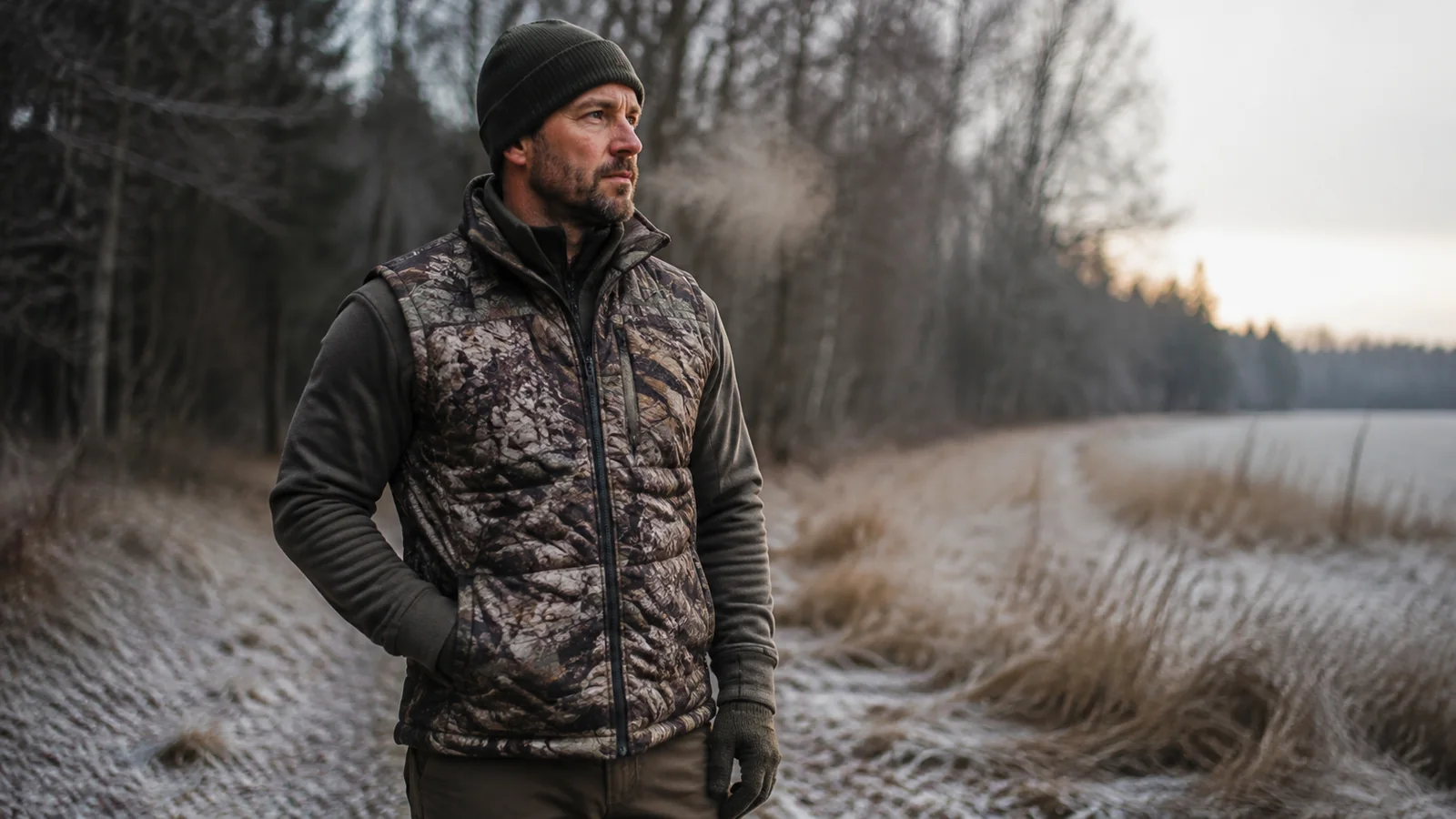
Best Heated Vest for Hunting: What Matters in the Field
Disclosure: My Pick Review may earn a commission when you buy through links on this page. This does not affect our editorial conclusions.
Hunters often need warmth without losing shoulder mobility or adding noisy bulk. A heated vest can warm the core while leaving the arms free, but camouflage alone does not make a vest suitable for the field.
We compared the practical factors that matter for hunting: fit under outerwear, battery position, control access, weather resistance, noise, care, and runtime expectations. We have not physically tested the featured vest.
Quick pick
TIDEWE Camo Heated Hunting Vest for Men
The TIDEWE listing describes a camouflage heated vest for men supplied with a battery pack. Its design makes it the most directly hunting-oriented product in our current heated-vest inventory.
Before buying, confirm the current camouflage pattern, size chart, heating-zone layout, battery capacity, claimed runtime by setting, charging accessories, and care instructions on the merchant page. Those details may vary by size or listing variation.


For a product-specific breakdown, see our TIDEWE heated hunting vest review.
What makes a heated vest useful for hunting?
A useful hunting vest should warm the torso while fitting cleanly between a moisture-managing base layer and a weather-resistant outer layer. It should allow shouldering, climbing, sitting, and reaching without the battery digging into the body.
The best choice is not automatically the one with the most heat zones. Coverage, control, fit, and dependable power management matter more than a large number in a product title.
Seven buying criteria
1. Layer-compatible fit
Decide whether you will wear the vest over a base layer or under a jacket. Use the manufacturer’s garment measurements rather than your usual casual-shirt size. Check mobility with both arms raised and with any pack or safety harness you use.
2. Battery-pocket position
A battery near the waist can become uncomfortable against a backpack hip belt, climbing harness, or tree-stand safety system. Examine product photos and measurements before ordering.
3. Quiet materials
Some shiny puffer shells and stiff fabrics produce noticeable noise when they rub against branches or outer layers. If quiet movement is important, look for fabric and construction details rather than assuming all camouflage garments are silent.
4. Accessible controls
You should be able to change the heat setting while wearing normal layers. A bright illuminated control may also be undesirable in low-light situations, so check where it sits and whether it can be covered.
5. Realistic runtime
Battery runtime depends on the selected heat level, ambient temperature, wind, garment fit, battery condition, and how often settings change. Treat any advertised maximum as a conditional claim, not a guaranteed full-day result.
6. Weather strategy
A heated vest is not automatically waterproof. Use it with suitable rain or snow protection and follow the manufacturer’s rules for wet conditions. Disconnect power if the battery area or connector becomes wet.
7. Charging and spare-power plan
For long outings, verify charging time and whether the manufacturer supports a spare battery. Do not connect an unapproved battery merely because the plug appears compatible.
Heated vest versus heated jacket for hunting
A vest offers less bulk around the arms and can be easier to layer. A heated jacket may provide broader coverage but can add weight and restrict movement. Hunters who already own a dependable waterproof or insulated shell may prefer the flexibility of a vest underneath it.
How to use heat efficiently
- Warm the vest briefly on a higher setting, then reduce it once comfortable.
- Wear a suitable base layer so warmth is retained without placing powered clothing directly against sensitive skin.
- Keep an insulating or weather-resistant layer over the vest when conditions require it.
- Switch the vest off when entering a warm vehicle or building.
- Carry non-powered insulation as a backup; batteries can run out or perform differently in severe cold.
Safety and care
Inspect the cable, connector, battery pocket, and battery before each trip. Stop using the garment if you notice swelling, damage, unusual heat, odor, or intermittent power. Remove the battery before washing and follow the exact care label. Let every connector dry fully before reconnecting power.
Who should consider the TIDEWE vest?
It is most relevant to shoppers who specifically want camouflage styling, a men’s hunting-oriented cut, and a battery included. Buyers who prioritize a low-profile urban style, children’s sizing, or a women’s tailored fit should consider a different category.
What is the best heated clothing for hunting?
There is no single best heated garment for every hunt. A heated vest is often the most practical starting point because it warms the core while leaving the shoulders and arms free for climbing, drawing a bow, handling a firearm, or carrying a pack. A heated jacket can add more coverage in very cold, low-movement conditions, while heated gloves or socks may matter more if your hands or feet are the first areas to become uncomfortable.
| Heated clothing type | Best suited to | Main tradeoff |
|---|---|---|
| Heated vest | Core warmth with good arm mobility | Less arm coverage than a jacket |
| Heated jacket | Long stationary periods in colder conditions | More bulk around the shoulders and arms |
| Heated gloves | Cold hands during long sits | Can affect dexterity depending on design |
| Heated socks | Cold feet during low-movement hunts | Battery placement and boot fit matter |
If you are deciding between upper-body options, see our heated vest vs heated jacket comparison.
Frequently asked questions
Is a heated vest good for hunting?
It can be useful when you want extra core warmth without adding much bulk to the arms. The most important checks are fit, fabric noise, battery placement, control access, compatibility with your outer layers, and whether the vest can run long enough for the way you hunt.
Should a heated hunting vest fit tight?
It should sit close enough for the heating panels to stay near your torso, but it should not restrict breathing, shoulder movement, or the layers you normally wear in the field. Use the manufacturer’s chart rather than sizing down just to make the vest feel hotter.
How long should a heated hunting vest battery last?
Runtime depends on battery watt-hours, heat setting, controller behavior, temperature and how often the heating elements cycle. For a transparent estimate, use our heated-clothing battery runtime calculator rather than relying only on a headline runtime claim.
Our conclusion
The TIDEWE is the clearest hunting-specific candidate in our current comparison set, but the final decision should depend on verified fit, battery placement, fabric noise, and current listing details. Camouflage styling is useful only when the garment also works with the rest of your field system.
See our broader heated-vest comparison and our guide to how heated vests work for more background.
Before ordering, also review our heated-vest sizing and layering guide and learn how to check replacement-battery compatibility.
As an Amazon Associate I earn from qualifying purchases.