How Should a Heated Vest Fit? Sizing and Layering Guide
Disclosure: My Pick Review may earn a commission when you buy through links on this page. This does not affect our editorial conclusions.
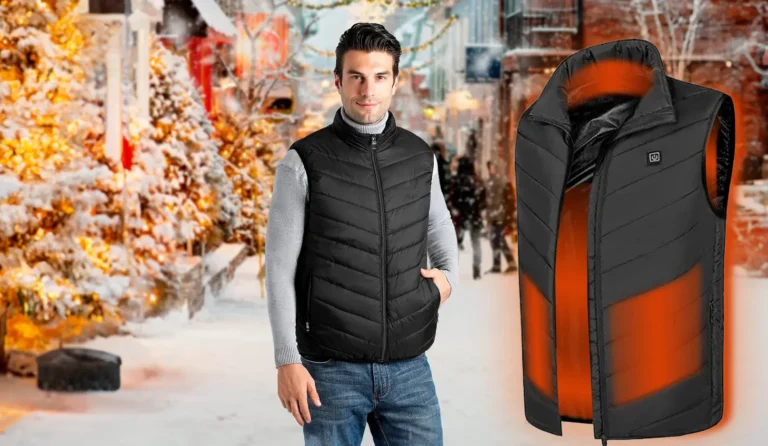
A heated vest should fit close enough for warmth to reach your torso, but it should not restrict breathing, movement, or comfortable layering. The correct fit depends on the vest’s cut and whether you will use it indoors, under a shell, or over thicker clothing.
This research-based guide explains how to measure and assess fit. We have not physically fitted or tested every product mentioned.
Quick answer
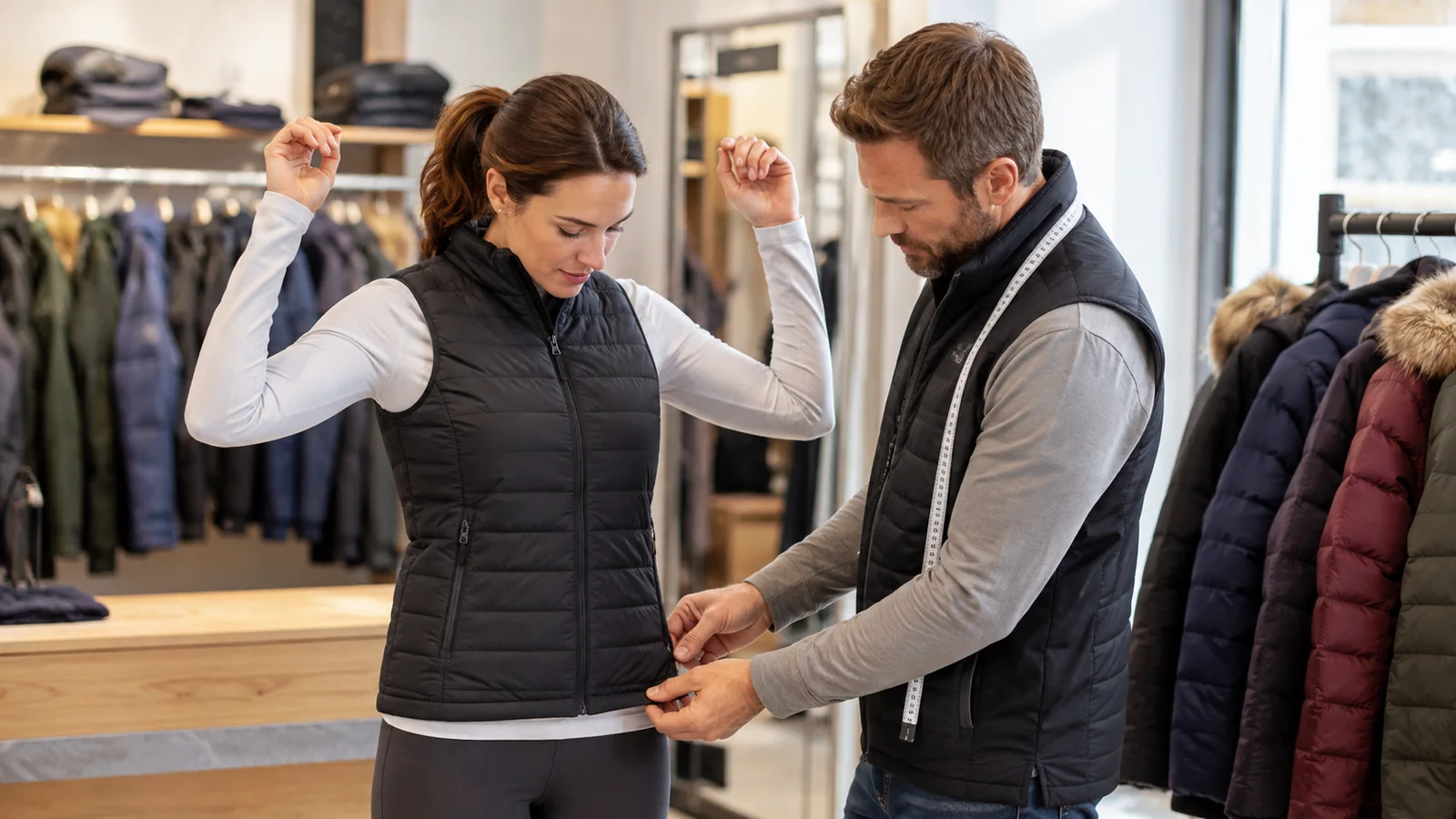
A heated vest should feel comfortably close around the chest and upper back while allowing you to raise your arms, bend, sit, and take a full breath. It should not pull across the zipper or leave large air gaps around the torso. The battery should remain secure without pressing painfully against your body or other equipment.
Why fit affects warmth
Heated panels warm the nearby garment and body area. A very loose vest can leave air gaps that reduce the warmth you feel, while an excessively tight vest can compress layers and become uncomfortable. A close, mobile fit is usually the useful middle ground.
Fit does not replace insulation. In wind, rain, or severe cold, a suitable outer shell helps retain warmth and protect the system according to the manufacturer’s instructions.
Five signs the vest fits correctly
- The zipper closes smoothly without pulling or rippling severely.
- You can take a deep breath without pressure across the chest.
- The shoulder openings do not cut into your arms.
- The vest stays near the torso when you bend or reach.
- The battery pocket remains secure and comfortable while sitting and walking.
Signs it is too tight
- The zipper is difficult to close or visibly strained.
- The armholes rub or restrict shoulder movement.
- You cannot comfortably add the intended base layer.
- The battery or connector presses into your side.
- The garment rides upward when you raise your arms.
Do not choose a painfully tight fit in an attempt to feel more heat. Comfort and unrestricted movement are essential.
Signs it is too loose
- Large gaps remain between the heated areas and your torso.
- The vest shifts substantially when you walk.
- The battery swings or pulls the garment to one side.
- The armholes or neckline allow excessive cold air movement.
- You must overtighten an outer jacket to hold the vest in place.
How to measure for a heated vest
Chest
Wrap a soft measuring tape around the fullest part of the chest, keeping it level and comfortably snug. Measure over the type of base layer you expect to wear.
Waist or midsection
Measure around the area indicated by the brand’s chart. Do not assume every manufacturer uses the same waist point.
Torso length
Compare the garment length with where you want the vest to finish. A vest that is too short may rise above a waistband; one that is too long can bunch when sitting.
Garment measurements versus body measurements
Read the size chart carefully. Some charts list body dimensions, while others list the finished garment. Those are not interchangeable. If the listing is unclear, ask the manufacturer.
Men’s, women’s, and unisex cuts
A women’s cut may taper through the waist and allow different room through the chest or hips. A men’s cut may be straighter through the torso. A unisex vest can work well, but shoppers should rely on actual measurements rather than the gender label.
Unisex example: PBNBP 28-zone heated vest
The PBNBP listing presents this puffer-style vest for both men and women. Because unisex sizing can fit bodies differently, compare the current garment chart with your chest and torso measurements and check the return terms. We have not independently verified every specification in its title.


Women’s example: InoKraft lightweight quilted vest
The InoKraft women’s model uses a more tailored lightweight design. Public listing information describes stretch side panels, which may help mobility, but shoppers should still measure and choose according to the current chart.

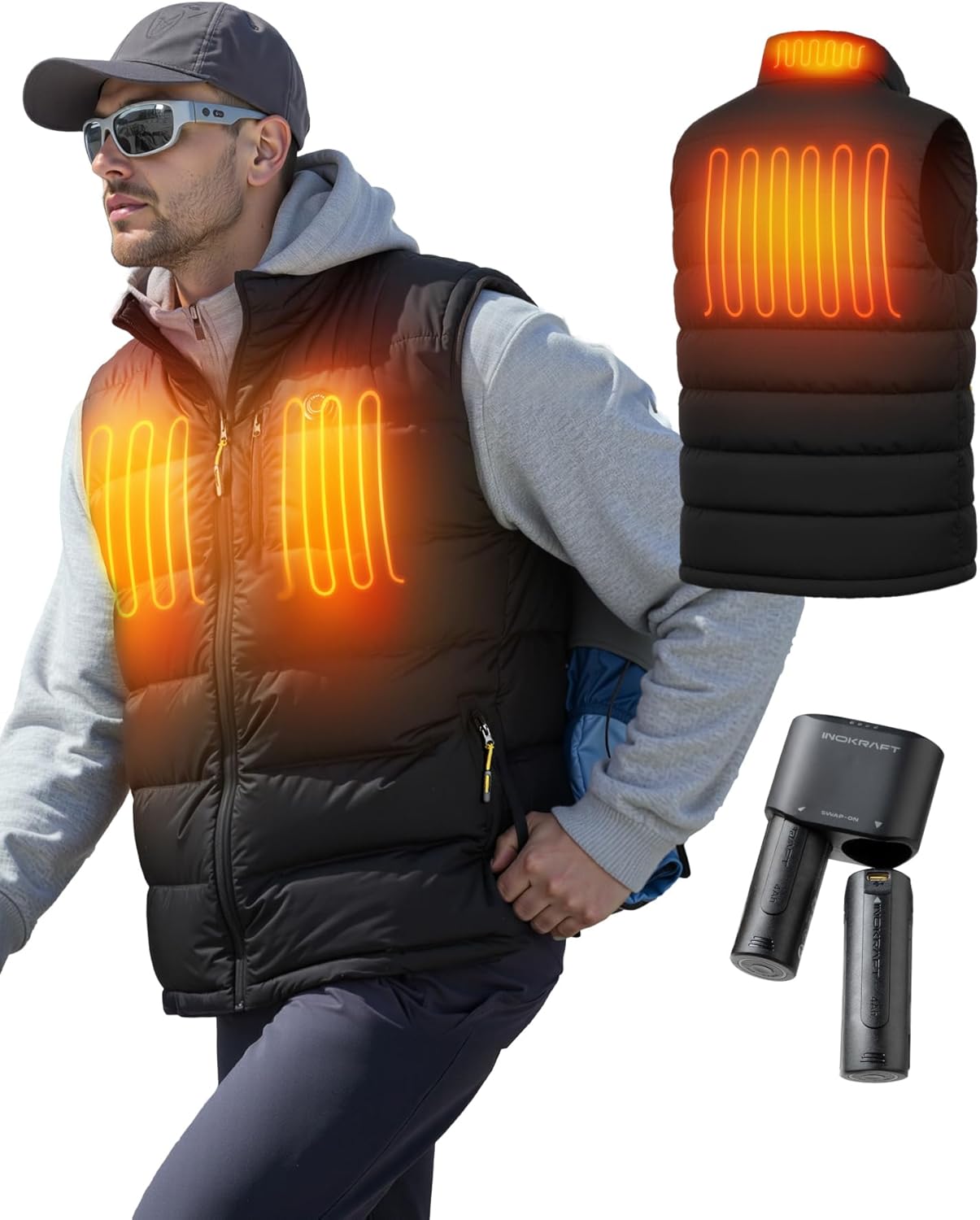
Men’s example: InoKraft IKB4L40
The replacement product B0FF4RMCTB has been identified as an InoKraft men’s heated vest, model IKB4L40. Its US size chart and full specifications should be reconfirmed on the live listing before purchase.
How fit changes by activity
Everyday wear and commuting
A low-bulk fit over a thin base layer can work well under a normal winter coat. Sit down while trying the vest to check the battery pocket against a chair or seat belt.
Hunting
Allow room for the planned base layer while keeping the vest close enough to avoid bunching. Check compatibility with backpack belts, safety harnesses, and a weather shell. See our heated hunting vest guide.
Outdoor work
Test reaching, lifting, bending, and tool-belt placement. The garment should not restrict movement or leave the battery where equipment presses against it.
Children
Use the manufacturer’s child-specific chart and reassess fit as the child grows. Do not buy several sizes too large simply for growth. Read our parent’s heated-vest guide.
Should a heated vest go under or over a jacket?
In many situations, wearing it over a base layer and under an insulating or weather-resistant shell keeps the heated areas near the torso and helps retain warmth. However, follow the product instructions and consider your activity level.
A vest worn over a bulky sweatshirt may need more room, but excessive space can reduce perceived warmth. Make measurements while wearing the intended layers.
What if you are between sizes?
Compare the actual garment dimensions and intended layering. If both sizes could work, consider shoulder mobility, torso length, battery-pocket position, and the seller’s return policy. Do not assume “size down for more heat” is safe or comfortable.
Final fitting checklist
- Wear the base layer you plan to use.
- Zip the vest completely without forcing it.
- Take a full breath.
- Raise both arms and reach forward.
- Bend and sit.
- Add your normal outer jacket.
- Check the battery pocket against a chair, belt, or pack.
- Confirm the cable does not pull during movement.
How do I choose the right size for a body warmer?
“Body warmer” is another term many shoppers use for a sleeveless insulated or heated vest. Start with the manufacturer’s size chart, measure your chest and torso over the base layer you expect to wear, and check whether the chart lists body measurements or finished-garment measurements.
For a heated model, aim for a fit that keeps the heating panels reasonably close to your torso without restricting breathing, shoulder movement, or a thin insulating layer underneath. If you are between sizes, choose based on the layers you actually plan to wear rather than sizing down simply to make the vest feel hotter.
Bottom line
A heated vest should be close, comfortable, and mobile—not skin-tight and not baggy. Accurate measurements and realistic layering plans are more dependable than ordering by your usual shirt size.
For product options, see our heated-vest comparison and lightweight heated vests for women. For the underlying technology, read how heated vests work. If you are deciding how to layer, compare a heated vest vs heated jacket.
As an Amazon Associate I earn from qualifying purchases.