Are Heated Vests Worth It? Pros, Cons and Who Should Buy One
Disclosure: My Pick Review may earn a commission when you buy through links on this page. This does not affect our editorial conclusions.
Are heated vests worth it? For the right user, yes. A heated vest can add adjustable core warmth without the arm bulk of a full jacket, making it useful for commuting, outdoor work, hunting, hiking, sporting events, travel, and other situations where temperatures change during the day.
But a heated vest is not automatically better than ordinary insulated clothing. You are also buying a battery system, charging routine, controls, care requirements, and another piece of gear that needs to fit correctly. The value depends on how often you will use the heat, whether the battery system suits your routine, and whether the vest layers well with clothing you already own.

Quick answer
A heated vest is most likely to be worth the money if you regularly feel cold outdoors, spend long periods in changing temperatures, want to keep your arms free, or already use a layering system. It is less compelling if you only need occasional warmth, dislike charging batteries, or already own an insulated jacket that keeps you comfortable.
Before choosing a model, see our heated-vest comparison and our guide to how heated vests work.
What a heated vest actually adds
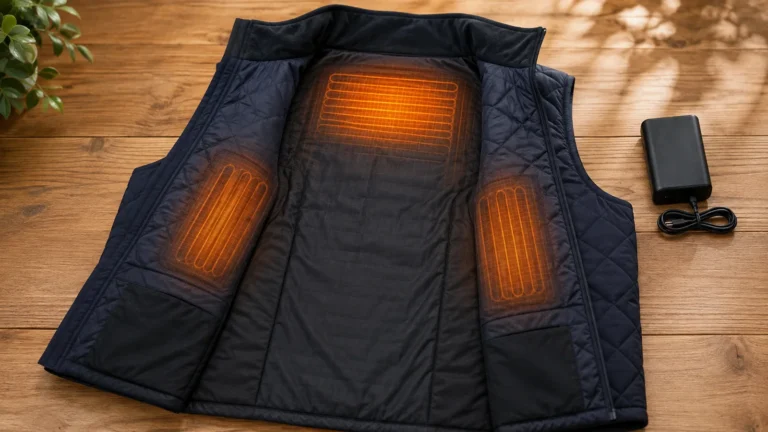
A standard insulated vest traps body heat. A heated vest adds powered heating elements—usually positioned around areas such as the chest, back, neck, or pockets depending on the model. The user can normally select between several heat levels.
The main benefit is control. Instead of adding or removing a thick layer every time conditions change, you can reduce or increase heat while keeping the same garment on. That flexibility can be useful when moving between a cold outdoor environment, a vehicle, a warehouse, a sporting venue, or a warmer indoor space.
The biggest advantages
1. Adjustable warmth
The strongest reason to buy a heated vest is that warmth can be adjusted. A conventional insulated vest gives you roughly the same passive insulation all the time. A heated vest can provide more warmth when you are stationary and less when you become active.
2. Core warmth without bulky sleeves
Vests leave the arms free, which can be useful for work, hiking, driving, hunting, photography, yard work, or any activity where shoulder mobility matters. A heated vest can therefore add warmth while remaining easier to layer than a thick heated jacket.
3. Layering flexibility
A heated vest can work as an outer layer in mild cold or as a mid-layer beneath a windproof or waterproof jacket. That makes it more adaptable than a single heavy outer garment. Our heated-vest fit and layering guide explains how close the vest should sit to the body.
4. Useful warmth when activity level changes
People who alternate between moving and standing still often notice temperature changes more than someone doing one steady activity. Adjustable heat can be useful during commutes, spectator sports, outdoor work breaks, tree-stand hunting, or long waits outside.
The main disadvantages
1. You have to manage a battery
A heated vest adds charging, storage, compatibility, and battery-health considerations. Some models include the battery; others do not. A power bank also adds weight, usually in a pocket near the waist or torso.
Before using a replacement or third-party pack, verify the exact electrical requirements. See our heated-vest battery compatibility and safety guide.
2. Maximum runtime claims need context
Runtime can vary substantially by heat setting, battery capacity, battery age, ambient temperature, garment fit, and how often settings are changed. A headline claim such as “up to 8 hours” usually describes a particular set of conditions rather than a guaranteed result for every user.
Use our heated-clothing battery runtime calculator to understand how energy capacity and power draw relate.
3. Fit matters more than many shoppers expect
A heated vest that hangs too loosely may not transfer warmth efficiently to the torso. One that is too tight can restrict breathing or movement and leave no room for layering. A correct fit is therefore part of the heating system, not merely a comfort issue.
4. More heating zones do not automatically mean better performance
A vest advertised with many zones can sound superior, but the number does not tell you panel size, placement, temperature uniformity, or electrical efficiency. Where the heat sits matters more than a headline count.
5. Washing requires more care
Most heated clothing requires removing the battery and following specific instructions for the cable, connector, wash cycle, and drying process. Never assume one vest can be washed exactly like another.
Who benefits most from a heated vest?
Commuters
A heated vest can be useful when walking to transit, waiting outdoors, or moving between cold streets and warm indoor spaces. The sleeveless design can also be less cumbersome inside a car or train.
Outdoor workers
Workers who spend long periods outside but still need arm movement may prefer a vest over a heated jacket. Battery position should be checked carefully if the job involves harnesses, tool belts, or frequent sitting.
Hunters
Hunters often value quiet layering, shoulder mobility, and warmth while stationary. See our heated vest for hunting guide and TIDEWE heated hunting vest review.
Hikers and travelers
A heated vest can be useful when activity level changes, although the battery adds weight and charging requirements. A lighter vest under an outer shell may be more flexible than carrying a second heavy jacket.
People who are frequently cold at sporting events
Sitting still in cold weather can feel much colder than walking at the same temperature. Adjustable core heat may make long outdoor events more comfortable without requiring a very bulky coat.
Who may not need one?
A heated vest may not be worth the extra cost if you spend little time outdoors, already stay comfortable with ordinary layering, dislike maintaining rechargeable batteries, or need full arm warmth more than core warmth.
It may also be unnecessary if your main problem is wind or rain rather than temperature. A heated vest does not replace a proper windproof or waterproof outer layer.
How much should battery life influence the decision?
Battery life should be evaluated against your actual use. If your commute lasts 45 minutes, an all-day runtime may not matter. If you work outside for eight hours, battery capacity, replacement packs, and charging access become much more important.
Compare runtime claims at the heat level you expect to use. High heat typically consumes energy faster than low heat, and cold conditions can also affect battery behavior.
Does a heated vest replace a winter coat?
Usually, no. A heated vest warms selected areas of the torso but does not automatically provide wind protection, waterproofing, arm insulation, or the total coverage of a winter coat. In colder or wetter conditions, the vest works best as part of a layering system.
What should you check before buying?
- Battery inclusion: Is the power source included or sold separately?
- Electrical requirement: What voltage, current, connector, or USB output does the vest require?
- Heating layout: Where are the heating areas placed?
- Controls: Are the heat levels easy to change while wearing the vest?
- Fit: Will it sit close enough to the body while leaving room for your planned layers?
- Battery pocket: Will the pack interfere with a seat belt, backpack, harness, or chair?
- Care: How must the vest be washed and dried?
- Returns: Can you exchange the vest if the fit is wrong?
Examples from our current heated-vest shortlist
Our current comparison includes models aimed at different users. The Solana Gear Heated Vest is a general-use unisex option with merchant-published 5V/2A power requirements. The InoKraft women’s heated vest has more detailed published fit and battery information. PBNBP emphasizes broad listed heating coverage, while HEWINZE targets children.
Bottom line: are heated vests worth it?
Yes, if adjustable core warmth solves a recurring problem for you. The best reason to buy one is not novelty—it is the ability to add heat without adding substantial sleeve bulk and to adjust that heat as conditions change.
They are less worthwhile when ordinary layering already keeps you comfortable or when the battery system creates more inconvenience than benefit. Start with your use case, then compare fit, power requirements, heating placement, and care rather than choosing from a marketing score.
See our five heated vests compared for the current shortlist.
As an Amazon Associate I earn from qualifying purchases.